Historical horror
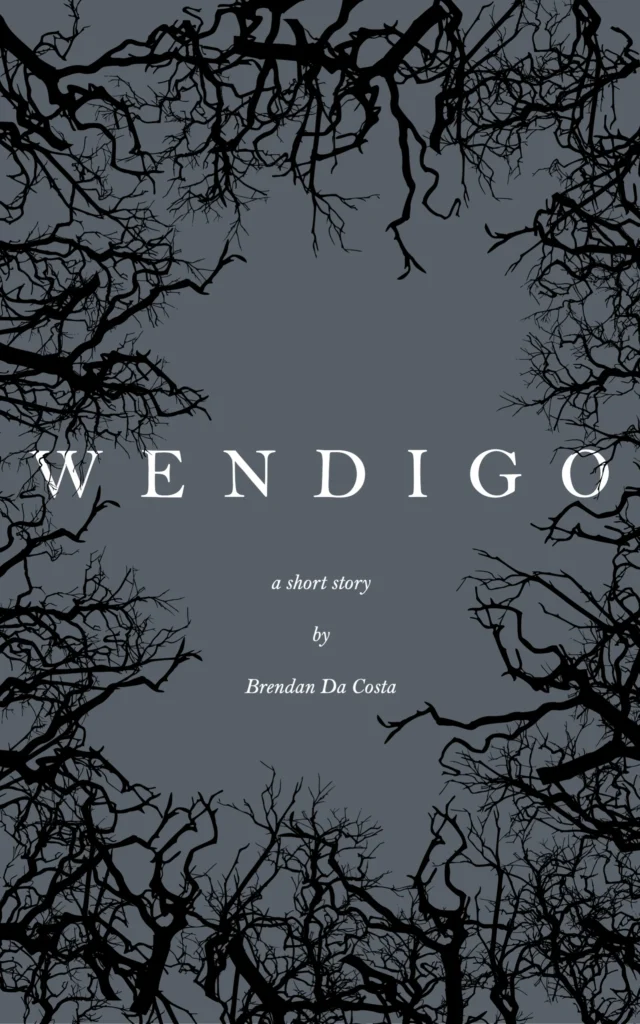
Wendigo
A haunting reimagining of the Lost Colony of Roanoke, where ambition, greed, and faith collide with something waiting beyond the settlement.
Roanoke, 1587
~ I ~
“He will not last the winter.”
Mary spoke into the folds of the sheets, hunched over her son’s body. If the boy still drew breath, Henry couldn’t tell. He stayed in the threshold, leant against the jamb; his arms folded across his broad chest. The late-autumn sun broke in as a block of light through the solitary window on the far side of the room. Where the block fell was on the midsection of the bed, on Mary’s head as it rested atop their son’s unmoving stomach. But the light did not fall as a blessing. It was a dark light, a bleak light; false and oppressive — a leaden weight of sunbeams that crushed that which fell beneath it.
Henry pushed himself off of the jamb with a strong yet subtle nudge of his shoulder. “I will lead us in prayer.”
Mary whipped around from the bed, arresting Henry in her gaze before he could step out of the threshold into the room. Her eyes were red, not with sadness but with rage — rage unlike Henry had seen in his wife.
“Prayer?” she seethed. “I have prayed,” the rage boiled out of her mouth as over the rim of a pot and scalded her own eyes and she recoiled from the burn. When she opened her eyes again, they were supplicant eyes, wet eyes, white and wide eyes and she dissolved into deep, guttural sobs, drawn up from her belly. “I have prayed, Henry,” she pleaded. “I have prayed for my son but for my sins the Lord has not answered. We are forsaken, Henry!” She collapsed again on the boy’s stomach. “We are forsaken in this land! Whence have we come, Henry?” she wailed, roiling over the bed, over her son. Then, all of a sudden and as if possessed, she stopped and stiffened and sat up straight in her chair, keeping her arms across the boy’s chest that moved up and down in uncertain, uneven fits. She turned to Henry once again, stiff and straight and with a disquieting composure — disquieting by its composure. “This is the Valley of Hinnom,” she said, as of having made a discovery of the plainly obvious. “This is Gehenna and we shall be consumed with unquenchable fire.”